Press release Kirsten Spuijbroek | Nullifying Passage
Kirsten Spuijbroek (translated from Dutch)
The mystery of life, in which the primal force of the eternal new beginning and the awareness of mortality merge, has been associated with the delicate beauty of flowers by people all over the world for tens of thousands of years. Even Neanderthals buried their loved ones under a blanket of flowers.
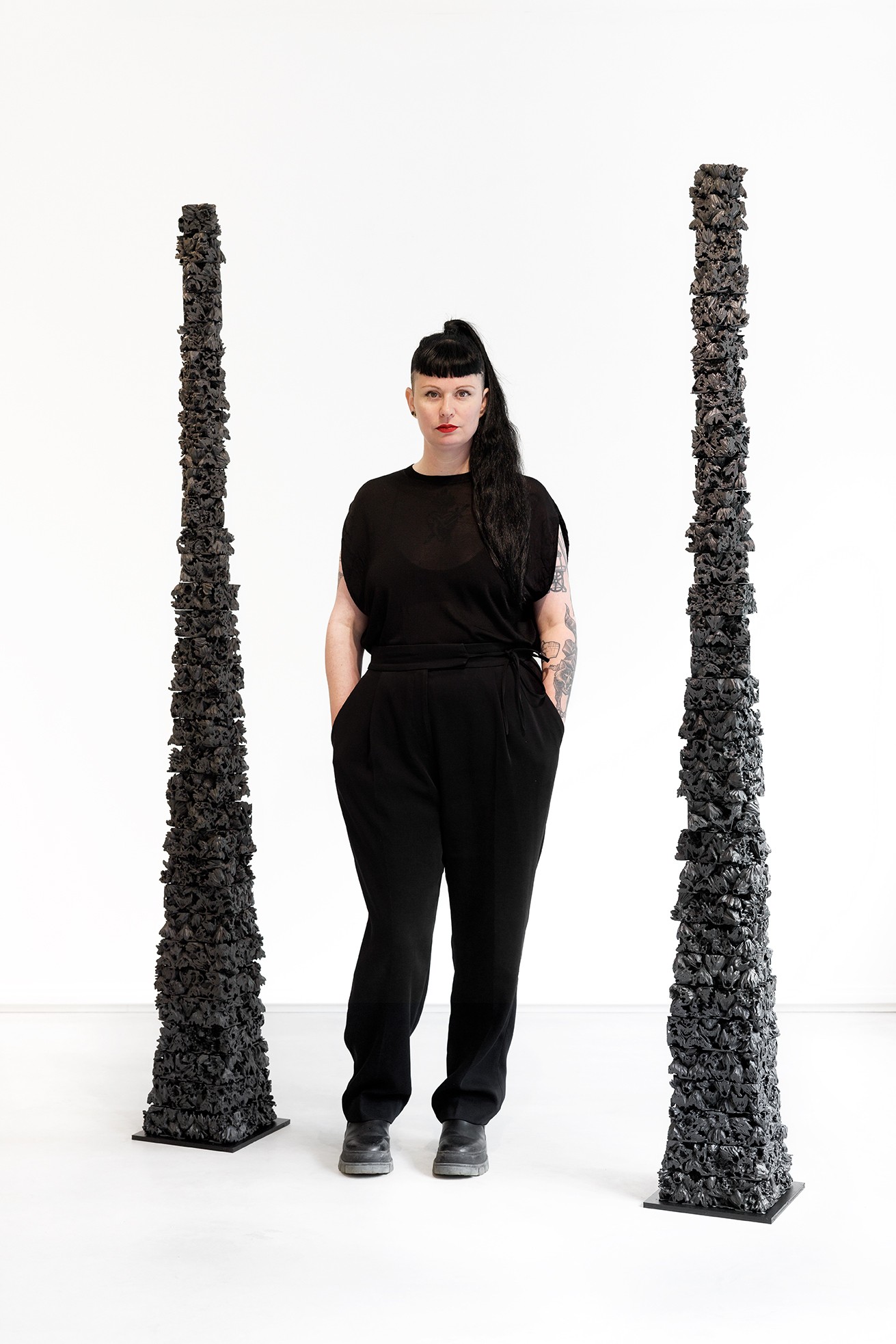
Kirsten Spuijbroek’s work begins with flowers. And even though they ultimately become static objects, it is the tranquil depiction of the processes at play that constitutes the poetry of the work. Everything about it points to change, to processes of creation, loss, and restoration. Not only in a physical and organic sense, but also in the artisanal and emotional sense of those words. The delicate beauty of flowers is immersed in liquid porcelain clay and, in the fire of the kiln, takes on a form that is equally fragile yet enduring. In the heat of over a thousand degrees, the flowers burn, yet their porcelain shell is formed.
What remains are not impressions of the flowers as they appear in nature. The artist is not concerned with the splendor of the flowers, but with making visible and conveying what the flowers experience: becoming heavier, becoming deformed, rotting and cracking, being tested by fire, disappearing and becoming eternal, leaving behind a form that is once again as delicate and beautiful as a natural flower, but in a completely different, human way.
What the flowers have experienced, our souls have experienced as well—through hardship and humiliation, through loss and mourning, through bloom and decay. Before our eyes, they merge into a single, intriguing, confrontational, and vulnerable image. It is the clear choice of flowers and porcelain, the calm and patient experimentation with materials, pigments, glaze, and techniques, that gives the various forms (installations, sculptures) their emotive power.
Everything is matter, earth, life, and yet all the effort we make, all the ingenuity we develop, all the struggle it takes to understand something and make peace with existence leads to this one realization: we must make room and time for our relationship to what is no longer here or not yet here. To those who are not yet here or are no longer here. It takes a lifelong dedication to that realization, and to the demanding details and principles of the craft, to bring this intense work into being.
'Nullifying Passage' explores moments of inner transformation, that vulnerable state in which old certainties fade away and new possibilities emerge. In this transition, the individual moves between control and surrender, between resistance and acceptance. The gate serves as a powerful symbol here: a border and, at the same time, an opening. It not only marks a physical passage but embodies the psychological space where doubt, fear, and courage converge. The gate presents us with a choice: to stay where it is safe, or to let the unknown in.